Watercolor Succulent Cactus Clipart: A Designer’s Review for Real Client Projects
As a graphic designer working across branding, packaging, and digital marketing visuals, I’m always evaluating design assets for their practical use in client work. When I first came across the Watercolor Succulent Cactus Clipart, I was immediately drawn to its soft, organic textures and the subtle imperfections that give it a handmade, artisanal feel. This is the kind of design asset that speaks to small business branding, botanical-themed products, and lifestyle content creators looking to infuse warmth and personality into their visuals.
First Impressions: Organic, Textured, and Versatile
The Watercolor Succulent Cactus Clipart set includes a variety of cactus and succulent illustrations rendered in a loose, painterly style. Each image has a soft watercolor wash with light grain and subtle bleeding edges that mimic real brushstrokes. The color palette leans toward muted greens, sandy beiges, and earthy terracottas—perfect for nature-inspired brands or wellness-focused businesses.
From a design perspective, these illustrations carry a gentle visual weight. They don’t dominate a layout but instead add character and warmth. That makes them ideal for projects where the goal is to feel approachable, earthy, or artisanal—like a local plant shop, a handmade soap brand, or a wellness retreat campaign.
Real-World Use: From Branding to Print-on-Demand
I recently tested the Watercolor Succulent Cactus Clipart in a packaging design concept for a new line of botanical candles. The client wanted a soft, natural aesthetic that felt handmade and eco-conscious. I used the cactus illustrations as decorative accents on the box corners and as part of a repeating pattern on the back label.
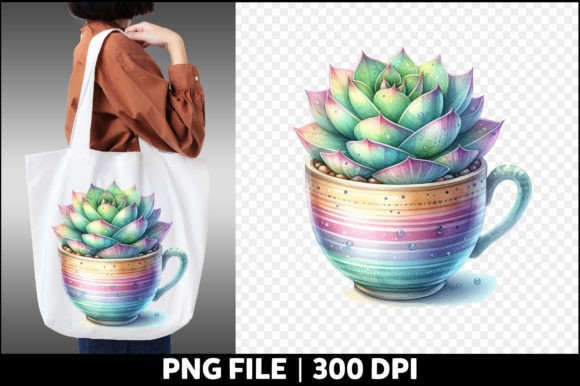
The results were surprisingly effective. The watercolor texture gave the packaging a tactile, premium feel without overwhelming the minimalist layout. I also exported the design for print-on-demand use, and the PNG transparency handled well in mockups. Whether it was applied to candle labels, greeting cards, or tote bags, the clipart maintained a cohesive visual language across the brand touchpoints.
Where This Clipart Shines
- Product packaging – Especially for botanical, eco, or wellness brands.
- Printable wall art – Great for Etsy sellers or digital designers creating seasonal decor.
- Social media graphics – Works beautifully as a background element or decorative accent.
- Canva templates – Ideal for content creators building branded templates.
- Cricut projects – Perfect for custom stickers, vinyl crafts, and DIY decor.
- Editorial design – Adds a soft, organic touch to blog layouts or digital magazines.
Where to Use It Carefully
While the Watercolor Succulent Cactus Clipart has a lot of charm, it’s not a one-size-fits-all solution. Its textured, organic nature can become a liability in certain design contexts:
- Small digital icons – The fine watercolor edges get lost at tiny sizes.
- High-contrast branding – Doesn’t pair well with ultra-modern or minimalist styles.
- Complex backgrounds – Can fade into busy or pattern-heavy layouts.
- Corporate materials – Too casual for formal business or legal documents.
- Low-resolution outputs – The grain and texture may pixelate if not handled carefully.
Typography Pairing and Visual Hierarchy
One of the most important aspects of using any clipart in professional design is how it interacts with typography. I tested the Watercolor Succulent Cactus Clipart with a range of fonts:
- Serif fonts – Worked well in editorial layouts, giving a classic, elegant feel.
- Sans-serif fonts – Balanced the organic nature of the clipart with a modern edge.
- Script fonts – Added a whimsical, handmade touch perfect for greeting cards or invitations.
- Handwritten fonts – Complemented the clipart’s informal, artistic vibe.
- Display fonts – Used sparingly, they created strong visual anchors in social media posts.
However, be cautious with overly decorative or heavy fonts—this clipart works best when supporting a clean, legible layout rather than competing for attention.
Technical Notes for Professional Use
Before using any design asset in client work, especially for commercial purposes, it’s essential to do a technical review. Here’s what I checked with the Watercolor Succulent Cactus Clipart:
- File formats – Came in PNG and SVG, both of which are standard and usable for print and digital.
- Transparency – PNGs had clean edges and solid alpha channels—great for overlaying on mockups.
- Vector editability – The SVG files allowed for color tweaks and scaling without loss of quality.
- Print quality – Tested on product mockups and looked crisp even at 300dpi.
- Licensing – Confirmed it includes a commercial license, making it safe for client branding and print-on-demand use.
Final Thoughts: A Practical Design Asset for the Right Project
The Watercolor Succulent Cactus Clipart isn’t just another decorative design bundle—it’s a usable, versatile illustration set that fits well into a range of creative projects. Whether you're designing a new brand identity for a plant-based business, creating Canva templates for clients, or crafting Cricut projects for your Etsy shop, this clipart can help elevate your visuals with minimal effort.
As with any creative design asset, the key is knowing where and how to apply it. For the right client and project, these watercolor cactus illustrations can be the difference between a generic layout and one that feels intentional, warm, and professionally cohesive.